Beyond Traditional Collections: Enabling Sustainable Microbiome Biobanking Services
Speakers
Davide Faggionato & Amber Scholz (DSMZ), Tanja Kostic (AIT) – with support of MICROBE consortium members
Abstract
Microbiome biobanking represents a new opportunity for research collections to extend their role and enable access to complex microbial resources. However, established business models developed around axenic cultures and traditional biological resource collections do not directly translate to the specific requirements, workflows, and value propositions of microbiome resources.
Within the MICROBE project, new scenarios have been developed to explore how existing collections and research infrastructures could evolve to offer sustainable microbiome biobanking services, with a particular focus on defined microbial communities (DMCs). These emerging resources require new considerations around preservation, quality management, characterisation, regulatory frameworks, access models, data integration, user communities, and long-term sustainability.
This workshop will present the scenarios developed within the MICROBE project and focus on three key aspects: practical considerations for implementing microbiome biobanking services, prioritisation of new sample types and resources to be integrated into collections, and questions related to liability and responsibilities associated with these emerging resources. The workshop will adopt a train-the-trainer approach, to strengthen knowledge exchange and empower participants to act as multipliers within their own institutions and networks. Through exchanges among collections, research infrastructures, scientists, and other stakeholders, the workshop aims to critically discuss challenges, identify barriers and opportunities, build capacity, and refine potential approaches for sustainable microbiome biobanking.
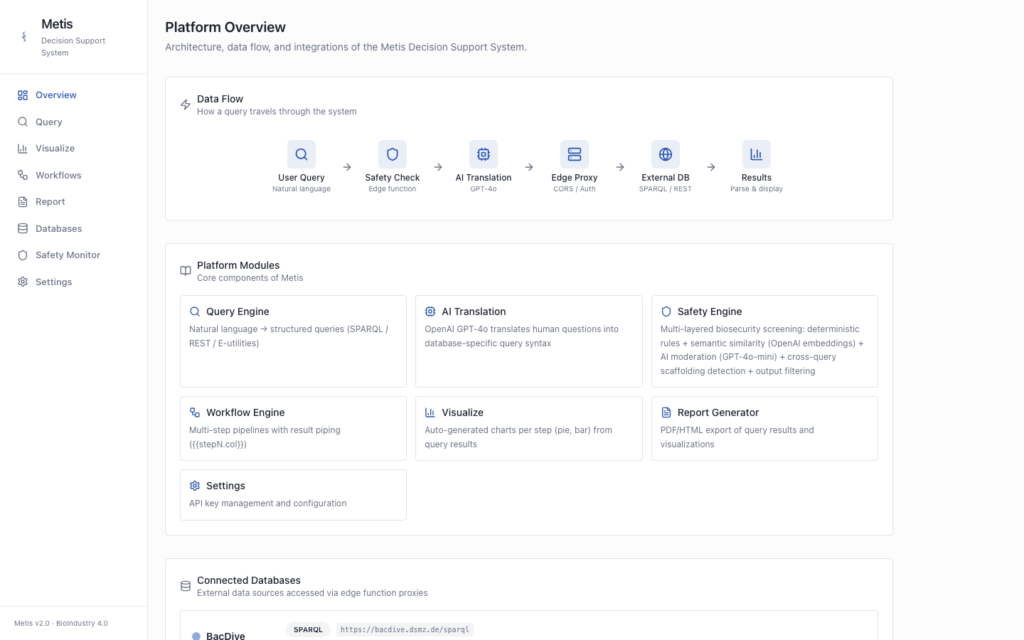
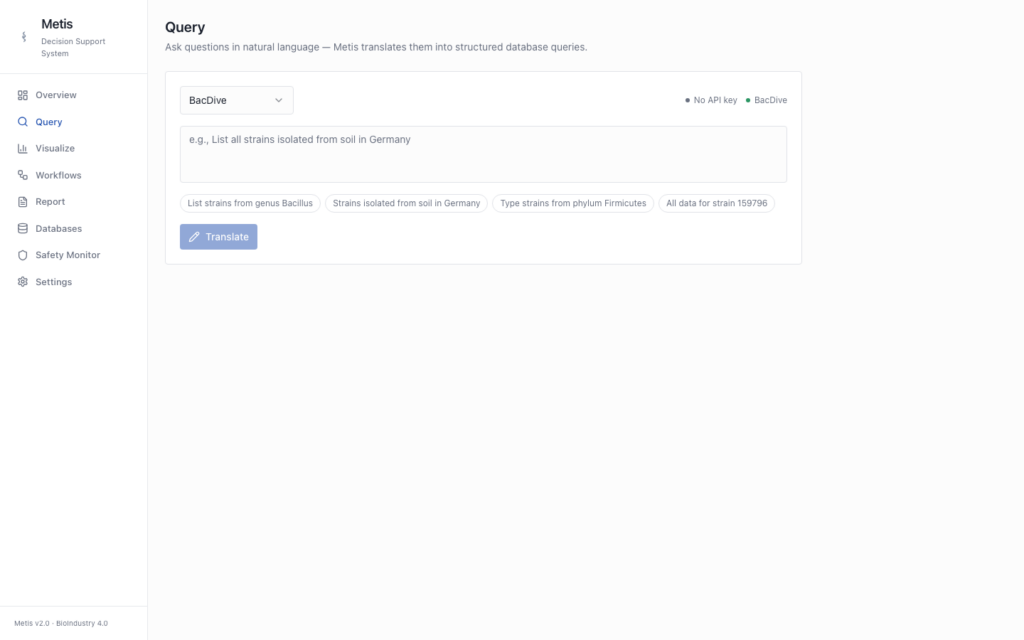
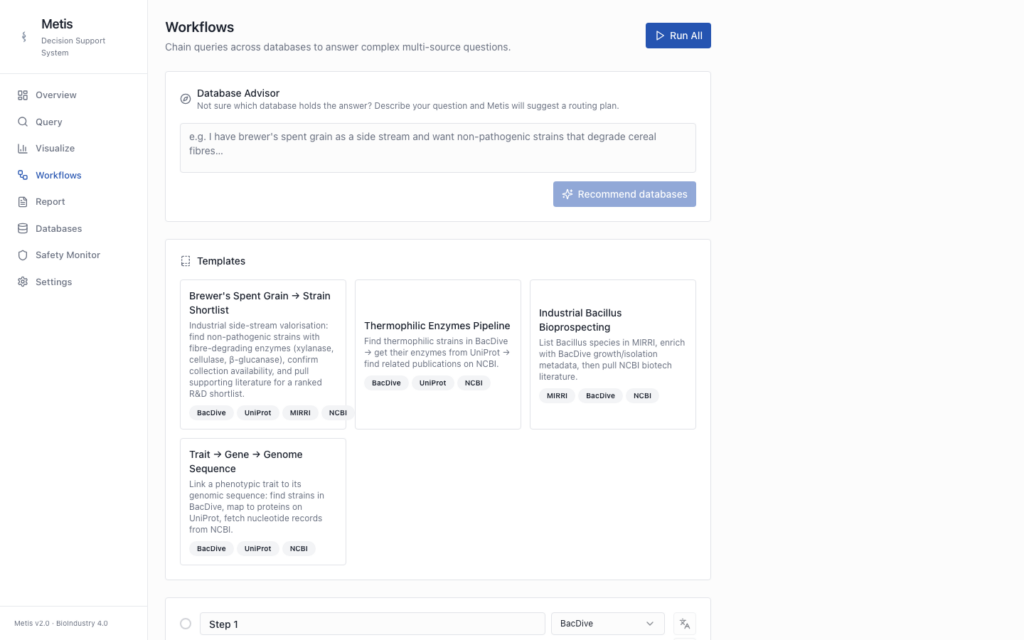
From natural-language questions to strain shortlists: co-designing Metis with the culture-collection community
Speakers
Marco Anteghini – LifeGlimmer GmbH, Berlin (corresponding organiser)
Lorenz Reimer – Leibniz Institute DSMZ, Braunschweig
On behalf of the BIOINDUSTRY 4.0 consortium (https://www.bioindustry4.eu/)
Abstract
Selecting a suitable microbial strain is often the slowest step in Design-Build-Test-Learn and biotechnology workflows: strain-level information is fragmented across culture collections, sequence archives, and literature, each with its own identifiers, schemas, and access interfaces.
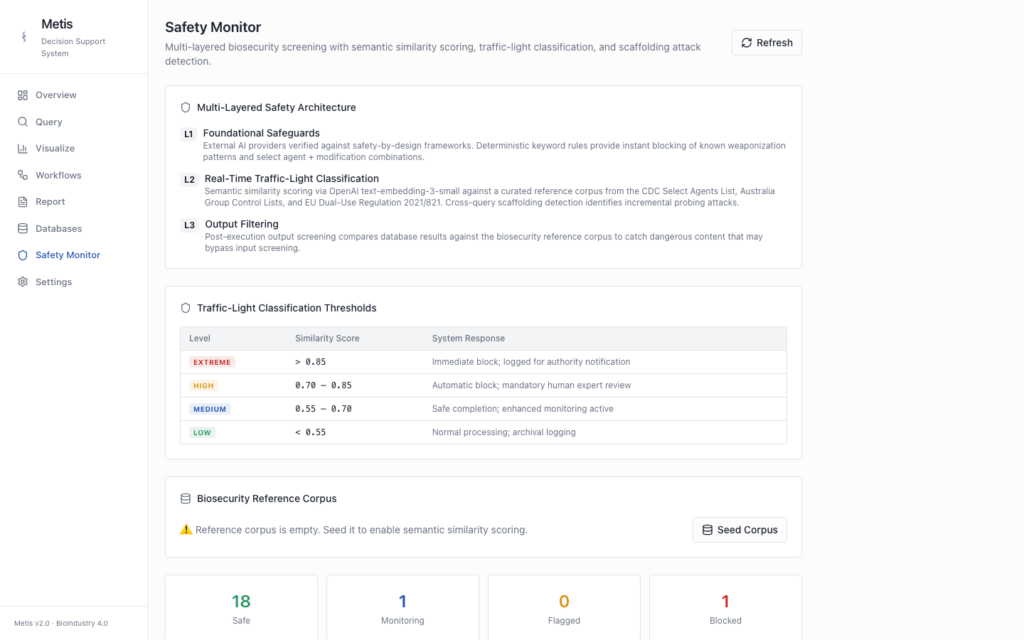
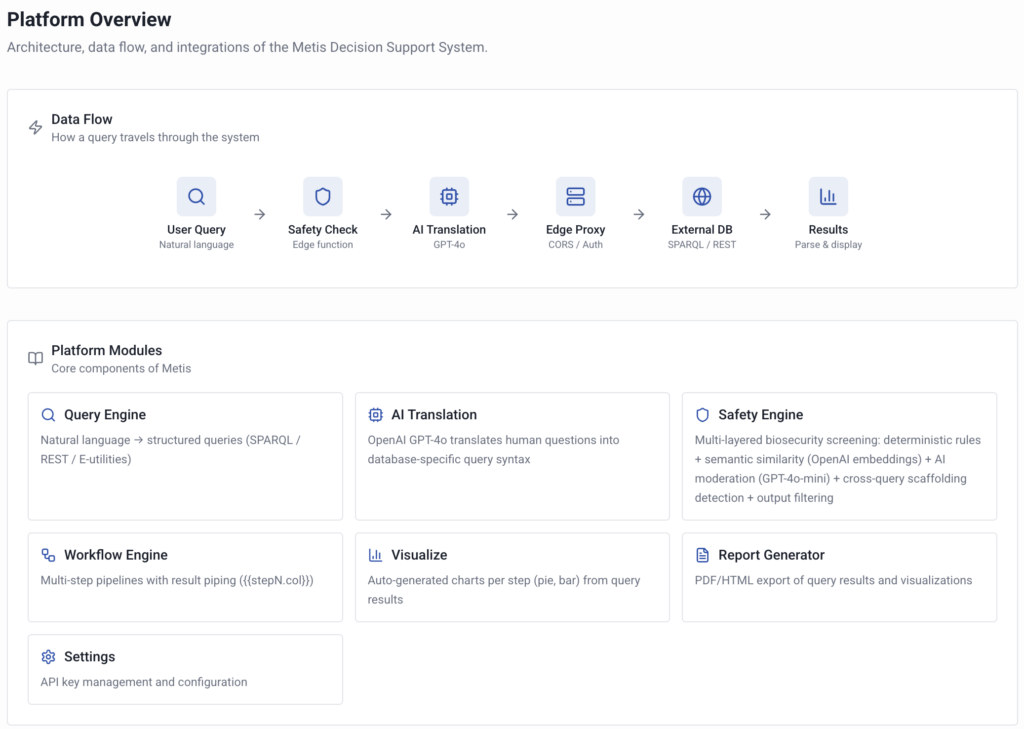
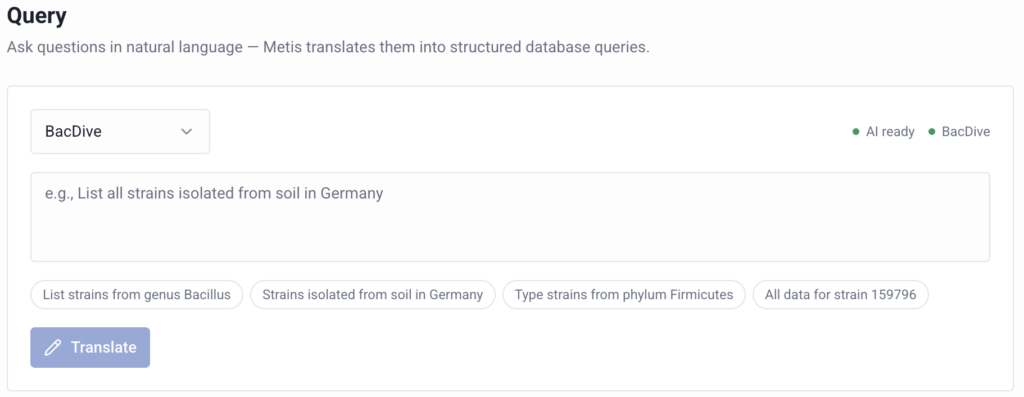
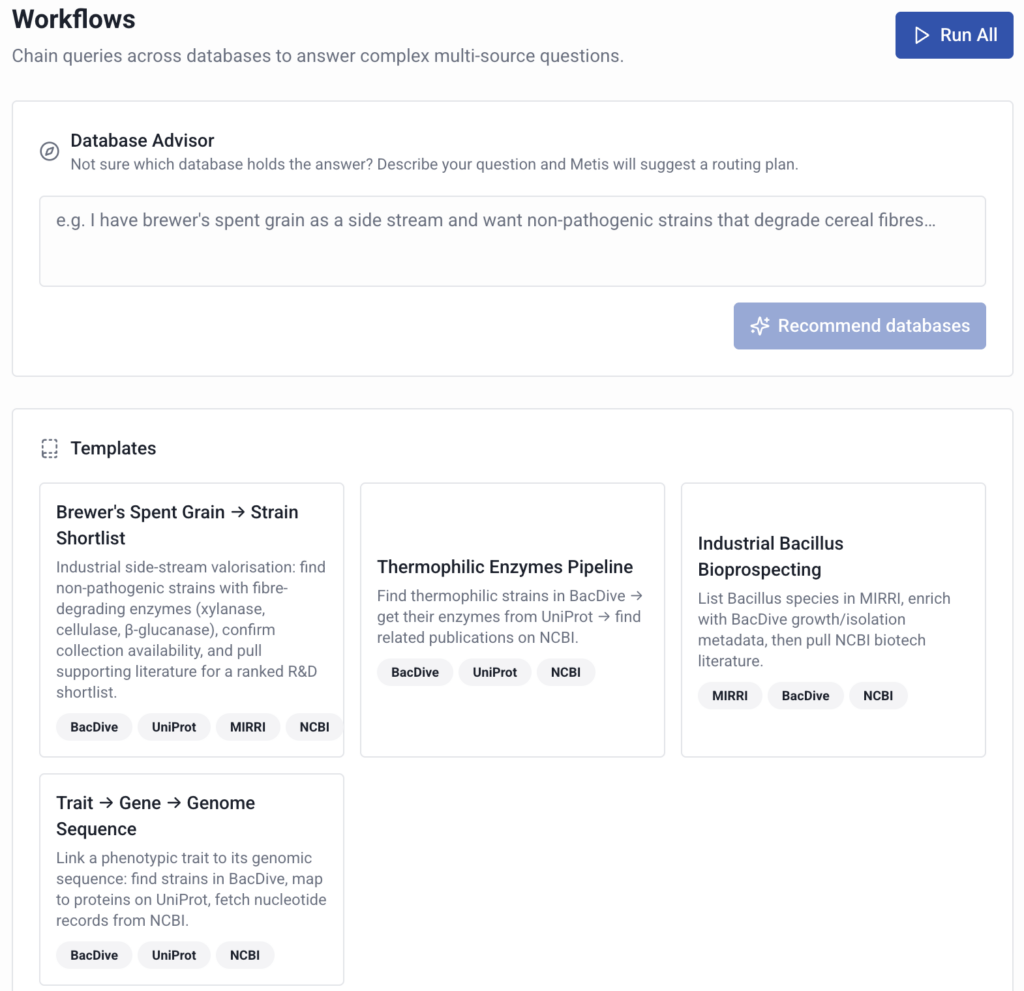
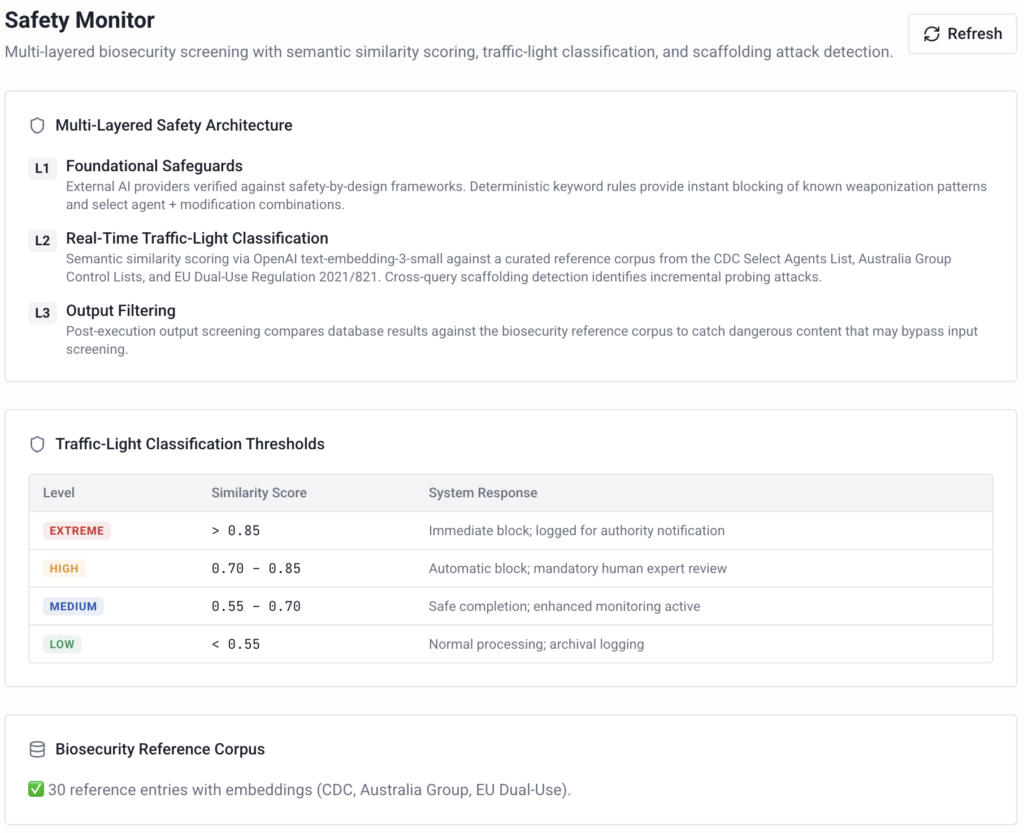
Metis is an open decision-support prototype that translates natural-language strain-discovery questions into structured, auditable queries over resources such as BacDive, MIRRI, UniProt, and NCBI, ranks candidate strains, and returns provenance-linked answers together with a built-in responsible-access (biosecurity) module. Unlike a plain large-language-model assistant, Metis grounds every recommendation in explicit database evidence and audit logs.
In this hands-on workshop, participants will (i) see Metis running live on real strain-discovery tasks, (ii) work in small groups on their own queries and compare Metis with conventional database search and with a plain-LLM baseline, and (iii) contribute structured feedback and feature priorities that will directly feed the next iteration of the tool.
The session is designed as a co-design activity with the culture-collection community, whose expertise is central to shaping how such a decision-support layer should serve mBRCs and their users.